
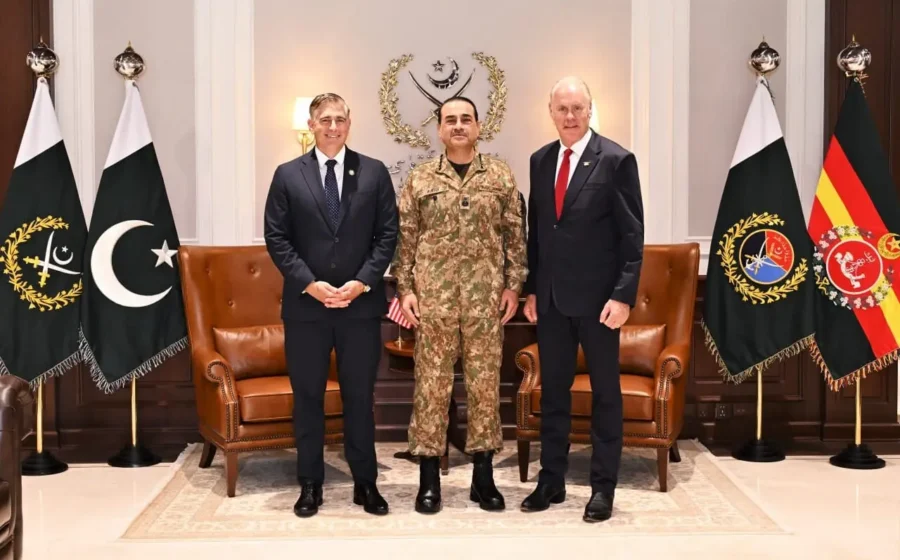
RAWALPINDI: A two-member delegation from the United States House of Representatives visited the General Headquarters (GHQ) in Rawalpindi on Sunday for a meeting with Field Marshal Syed Asim Munir, Chief of Army Staff and Chief of Defence Forces, where conversations centred on strengthening security cooperation and expanding economic partnership between Islamabad and Washington.
The American delegation comprised Congressman Ryan Zinke, representing Montana, and Congressman Michael James of Washington. According to a statement issued by the Inter-Services Public Relations (ISPR), the two lawmakers engaged the army chief on a range of subjects of shared concern, from regional stability to the future of defence and trade linkages between the two nations.
Much of the discussion revolved around the security landscape of the region and how Pakistan and the United States could deepen their defence-related engagement. Both sides used the meeting to explore practical steps that could reinforce the long-standing military-to-military relationship while addressing emerging regional challenges.
Field Marshal Munir used the occasion to make the case for Pakistan’s economic prospects, telling the visiting lawmakers that lasting regional stability cannot be separated from economic progress, expanded trade and stronger regional connectivity. He pointed to the government’s ongoing structural reform agenda, describing steps being taken to simplify doing business in the country and to draw greater foreign investment.
For their part, the visiting congressmen recognised Pakistan’s contribution to regional stability and its potential to serve as a resilient economic partner. The conversation extended to possible avenues for closer bilateral commerce, including greater involvement of the private sector and a push to grow two-way trade volumes.
Before concluding the visit, the American delegation conveyed appreciation for the reception extended by Pakistan’s military leadership and expressed continued interest in building on economic, commercial and institutional linkages between the two countries, the ISPR statement noted.