
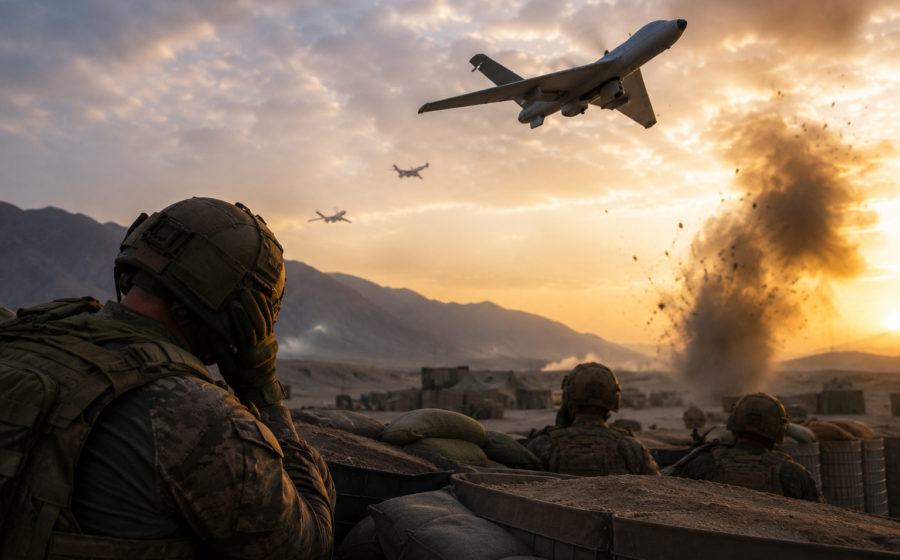
The growing use of one-way attack drones in modern conflicts is prompting renewed attention to the physical and psychological effects of repeated blast exposure on military personnel.
Recent operations in the Middle East have highlighted the issue as U.S. forces have encountered sustained drone and missile threats. Medical specialists and veterans’ organizations say the changing nature of warfare creates new challenges for understanding, diagnosing and treating traumatic brain injuries, particularly when personnel may experience multiple explosions over extended periods.
According to statements cited from the Pentagon and U.S. Central Command, more than 600 U.S. service members have been wounded in action during five months of conflict involving Iran, with traumatic brain injuries accounting for a significant share of reported injuries. Publicly available information, however, does not establish how many of those cases resulted specifically from drones rather than missiles, other explosions or separate combat incidents.
The distinction is important because researchers are still examining whether different weapons, blast directions and repeated exposures produce distinct patterns of injury.
Drone Threats Are Changing the Battlefield
Unmanned aerial systems have become increasingly prominent in conflicts around the world. Their relatively small size, long range and ability to approach military installations from different directions have changed how forces defend bases and infrastructure.
Unlike some ground-based explosive threats encountered during previous conflicts, aerial drones can potentially reach personnel stationed well away from conventional frontlines.
Dr. James Kelly, chief medical scientist at the Invisible Wounds Foundation and a specialist in traumatic brain injury, has argued that these characteristics deserve further medical study.
One consideration is the direction of the blast. An explosion occurring overhead or above ground level may expose the head and upper body differently from an explosive device detonating at ground level.
However, the precise relationship between drone attacks and particular patterns of traumatic brain injury remains an area requiring further research.
Sustained Drone Operations Create New Medical Questions
Drones have been used by state and non-state actors throughout the Middle East for several years. Their increasing availability has made unmanned systems a regular feature of regional security operations rather than an occasional battlefield technology.
The scale and frequency of recent attacks have increased interest in the cumulative effects of blast exposure.
One of the challenges for medical researchers is determining what happens when personnel experience multiple explosions over days, weeks or months, including incidents in which an individual does not immediately display obvious signs of injury.
The consequences of repeated low-level or significant blast exposure remain an active area of scientific investigation.
Lessons From Previous Missile Attacks
Past incidents demonstrate why identifying traumatic brain injuries can take time.
Following Iran’s January 2020 ballistic missile strike against Al Asad Air Base in Iraq, initial reports indicated there were no U.S. casualties. Subsequent medical evaluations, however, eventually identified 110 American service members as having suffered traumatic brain injuries.
The incident illustrated that brain injuries may not always be apparent immediately following an attack. Symptoms can emerge or be recognized during subsequent screening.
It also contributed to greater awareness within military medicine about the importance of examining personnel exposed to significant blasts even when there are no immediately visible injuries.
That increased awareness makes historical comparisons difficult. A higher number of diagnosed TBIs today does not automatically mean modern weapons are producing brain injuries at a greater rate than previous conflicts. Improvements in screening and recognition can also contribute to increased reporting.
Nearly 500,000 TBIs Recorded Since 2000
Traumatic brain injury has been a major health concern for the U.S. military throughout the post-9/11 era.
Defense Department figures cited in the original report indicate that nearly 500,000 traumatic brain injuries were recorded between 2000 and 2025.
Cases range considerably in severity. Some personnel recover relatively quickly, while others can experience longer-term cognitive, physical or psychological symptoms requiring continued treatment or support.
The scale of these cases has made TBI prevention, diagnosis and rehabilitation an important area of military and veterans’ healthcare.
Ukraine Offers Insights Into Drone-Era Trauma
The war in Ukraine has also given medical professionals an opportunity to observe how extensive drone use may affect troops.
Both Russian and Ukrainian forces have employed a wide range of unmanned systems for reconnaissance, targeting and attack. As drones have become increasingly common over the battlefield, researchers have examined possible links between these conditions and patterns of physical injury, anxiety and heightened alertness among personnel.
Dr. Joseph Bonvie, a retired U.S. Navy operational psychologist associated with the nonprofit Home Base, has studied some of these emerging psychological challenges.
One issue is the persistent nature of drone surveillance. Personnel may know that an unmanned aircraft could be observing their position before another system conducts an attack.
Modern communications can introduce another dimension: battlefield footage captured by drones may later appear online. For people directly involved in an incident, encountering recordings of their own combat experience could potentially complicate psychological recovery.
Researchers are still working to understand the long-term implications of these circumstances.
Psychological Effects Extend Beyond Physical Injuries
The medical implications of drone warfare are not limited to wounds caused directly by explosions.
The possibility of persistent aerial surveillance and sudden attack can contribute to prolonged periods of stress. Specialists are studying how these conditions may affect anxiety, hypervigilance and other psychological responses among personnel operating in drone-intensive environments.
These effects can overlap with physical symptoms associated with blast exposure, making diagnosis and treatment more complicated.
Researchers are therefore increasingly interested in assessing neurological and psychological health together rather than treating them as entirely separate issues.
New Technology Could Improve TBI Diagnosis
Diagnosing traumatic brain injuries remains challenging because there is no single test capable of identifying every case.
Clinical assessments have traditionally relied on reported symptoms, medical examinations and observations. New technologies are intended to provide clinicians with additional evidence.
The U.S. Army has begun introducing portable diagnostic equipment that analyzes blood for biomarkers associated with brain injury. Certain proteins can enter the bloodstream following damage to the brain, and detecting them may help medical teams determine whether a patient requires additional evaluation.
Such technology could be particularly useful in deployed environments where access to advanced medical imaging may be limited.
It is not intended to replace comprehensive clinical assessment but could help military medical personnel make faster decisions after blast exposure.
Repeated Blast Exposure Remains a Research Priority
Another unresolved issue concerns the cumulative effects of multiple blasts.
Research involving military personnel has examined whether repeated exposure can produce neurological changes even when symptoms cannot be connected to one particular explosion.
A 2024 Massachusetts General Hospital study involving 30 active-duty U.S. Special Operations Forces personnel reported a possible association between higher levels of blast exposure and certain brain changes.
The relatively small study does not settle the broader scientific question, but it adds to research examining how repeated blast exposure may affect neurological health over time.
Understanding cumulative exposure is particularly relevant as drones, rockets and other precision weapons allow attacks to occur repeatedly against military positions.
Research Funding Draws Attention From Veterans Groups
Veterans’ organizations have also raised concerns about funding available for traumatic brain injury research.
According to figures cited in the original report, U.S. Defense Department medical research funding related to TBI declined from approximately $175 million in 2024 to $40.5 million in 2026.
Organizations including the Veterans of Foreign Wars have called for continued investment in research, improved diagnostic methods and long-term treatment options.
Their concerns extend beyond any particular conflict or weapon system. Advances in understanding blast injuries could benefit personnel exposed to artillery, rockets, missiles, drones and other explosive threats across different operational environments.
A Broader Challenge of Modern Warfare
The increasing use of unmanned systems represents part of a wider transformation in military operations. Drones have demonstrated value for surveillance, communications, logistics and combat missions and are now employed by armed forces and other actors around the world.
At the same time, their widespread use creates questions for military medicine that extend beyond the technical capabilities of the aircraft themselves.
For researchers, the central issue is understanding how new patterns of warfare affect the people operating within them. That includes examining the consequences of overhead explosions, repeated blast exposure, persistent surveillance and prolonged operational stress.
As drone technology continues to evolve internationally, medical research, protective measures, early diagnosis and long-term treatment are likely to become increasingly important components of military preparedness.