
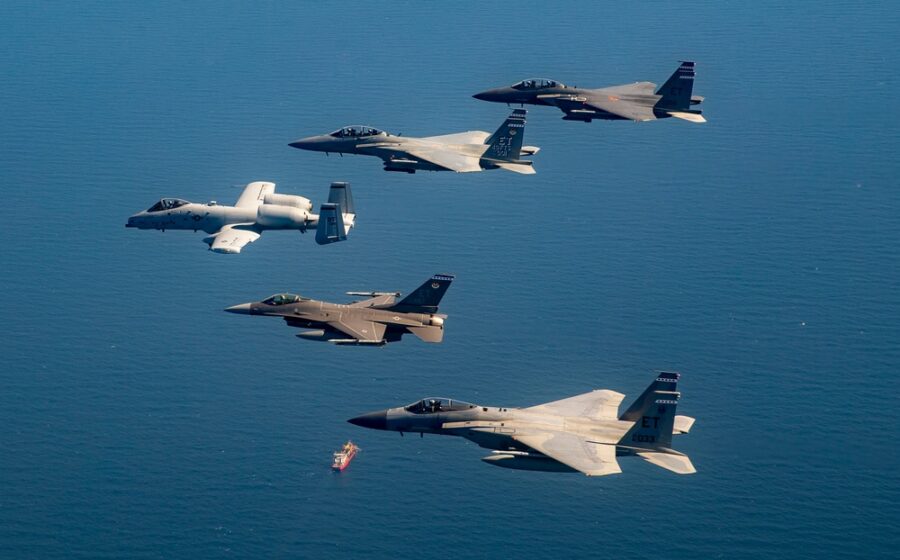
Fighter aircraft remain the most visible symbol of national air power, and the gap between generations of fighter technology can determine the outcome of an air campaign before a single shot is fired. From radar cross-section to sensor fusion and beyond-visual-range missile reach, understanding how fighter generations differ is key to understanding the shifting balance of air power in South Asia and beyond.
Understanding Fighter Generations
Fourth-generation fighters, such as the F-16 Fighting Falcon and Mirage variants, introduced fly-by-wire controls and multirole flexibility that defined air combat from the 1970s onward. Fourth-generation-plus aircraft, including the JF-17 Thunder Block III, Rafale and J-10C, add active electronically scanned array (AESA) radars, advanced electronic warfare suites and helmet-mounted cueing systems that dramatically extend situational awareness and missile engagement envelopes. Fifth-generation fighters, epitomized by the F-35 Lightning II and F-22 Raptor, integrate low-observable stealth shaping with sensor fusion that allows pilots to build a complete tactical picture without emitting revealing radar signals of their own.
Pakistan’s Fighter Fleet
The Pakistan Air Force operates a mixed fleet built around the JF-17 Thunder, co-developed with China, which now forms the backbone of the force in its most advanced Block III configuration featuring AESA radar and helmet-mounted display capability. This is complemented by upgraded F-16 Fighting Falcons acquired and modernized over several decades, giving PAF a credible multirole capability against a range of regional threats. Continued cooperation with China on next-generation platforms, including reported interest in fifth-generation aircraft, reflects Pakistan’s determination to keep pace with evolving regional airpower.
The Regional Picture
India’s air force operates a diverse mix including the French Rafale, Russian Su-30MKI, and indigenous Tejas light combat aircraft, alongside ongoing efforts to develop a fifth-generation Advanced Medium Combat Aircraft. China’s J-10C and stealthy J-20 continue to mature, giving Beijing an increasingly credible high-end fighter force. This asymmetry and diversity of fighter types across the region underscores why beyond-visual-range missile technology, electronic warfare and networked targeting have become just as important as the airframe itself in determining outcomes.
Beyond the Airframe: Weapons and Sensors
Modern air combat is increasingly decided in the beyond-visual-range regime, where long-range air-to-air missiles guided by powerful onboard radars and external sensors can engage targets tens of kilometres away. Weapons such as the PL-15 and AIM-120 AMRAAM family have pushed engagement ranges outward, making sensor performance, electronic countermeasures and datalink-enabled targeting arguably more decisive than raw manoeuvrability in determining who strikes first.
Looking Toward Sixth-Generation Airpower
The United States, several European nations and Japan are already investing in sixth-generation fighter concepts that pair optionally-manned aircraft with autonomous drone wingmen, directed-energy weapons and even more advanced stealth and sensor fusion. As these programmes mature over the coming decade, regional air forces including Pakistan’s will need to continue balancing scarce defence budgets between maintaining current fourth-generation-plus fleets and preparing for the next technological leap.
Conclusion
Fighter aircraft procurement decisions ripple through defence budgets, industrial partnerships and strategic alliances for decades. For Pakistan, sustaining a credible, modern fighter fleet through indigenous programmes like the JF-17 alongside selective high-end acquisitions remains central to preserving air power parity in one of the world’s most closely watched military rivalries.