
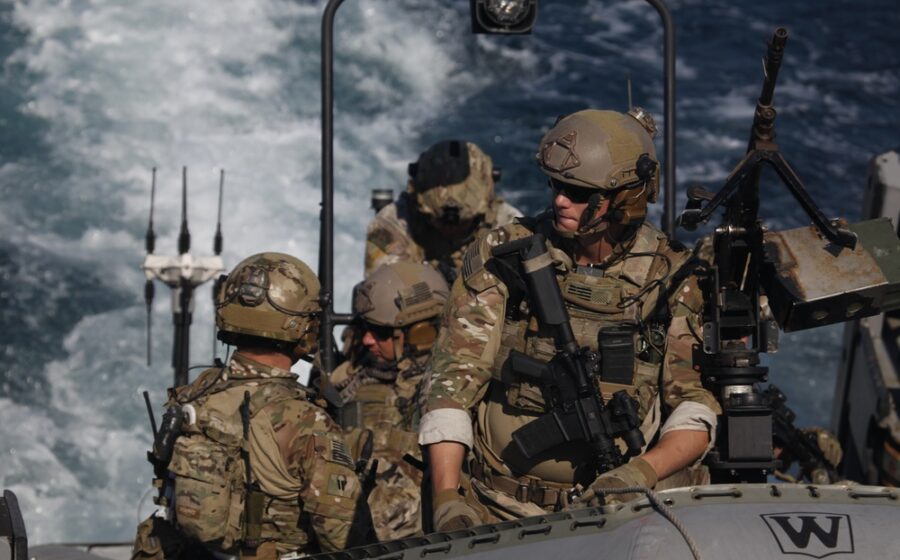
With the vast majority of global trade moving by sea, maritime security has become an increasingly central pillar of national security strategy, encompassing everything from countering piracy and smuggling to protecting critical port infrastructure and undersea cables. For Pakistan, whose economic future is closely tied to the Arabian Sea and the strategically vital Gwadar port, maritime security carries particular significance.
Why Maritime Security Matters
The world’s oceans carry the overwhelming majority of international trade by volume, making the security of sea lanes, chokepoints and ports a matter of direct economic consequence for any trading nation. Disruptions to maritime trade routes, whether from piracy, regional conflict or deliberate interdiction, can ripple through global supply chains and national economies within days, underscoring why naval powers devote such significant resources to maintaining open and secure sea lines of communication.
Threats in the Maritime Domain
Maritime threats span a wide spectrum, from traditional piracy and armed robbery against merchant vessels, to smuggling of narcotics and weapons, illegal and unregulated fishing that depletes coastal resources, and increasingly, the risk of sabotage against undersea cables and pipelines that carry the bulk of global internet traffic and energy supplies. Non-state actors have also demonstrated growing capability to threaten shipping directly using anti-ship missiles and explosive-laden drone boats, as seen in recent Middle Eastern maritime flashpoints.
Pakistan Navy’s Maritime Security Role
The Pakistan Navy maintains a dedicated maritime security focus through mechanisms such as its participation in multinational Combined Maritime Forces task groups, contributing to counter-piracy and counter-narcotics patrols across the wider Indian Ocean region. Domestically, protecting the strategically important Gwadar port and the sea lanes feeding the China-Pakistan Economic Corridor has become an increasingly prominent naval and coast guard priority, given the port’s significance to both Pakistani and Chinese economic and strategic interests.
Regional and Multinational Cooperation
Pakistan regularly hosts and participates in multinational maritime exercises such as the Aman series, bringing together navies from across the globe to practice counter-piracy, search and rescue and maritime interdiction operations. Such exercises build interoperability and trust among participating navies while showcasing Pakistan’s role as a responsible stakeholder in regional maritime security, particularly along the vital sea lanes connecting the Gulf, South Asia and East Africa.
Emerging Maritime Security Challenges
Climate change, resource competition and the growing militarization of maritime chokepoints are adding new layers of complexity to maritime security planning. Rising interest in Indian Ocean basing and access agreements among major powers, alongside the proliferation of naval drones and unmanned surface vessels, means maritime security strategies must continuously adapt to a more crowded and technologically contested oceanic environment.
Conclusion
Securing maritime approaches, ports and sea lanes remains a foundational, if sometimes underappreciated, element of national security. For Pakistan, sustained investment in naval and coast guard capability, alongside active participation in multinational maritime security cooperation, will remain essential to protecting the economic lifelines that flow through its Arabian Sea coastline.