
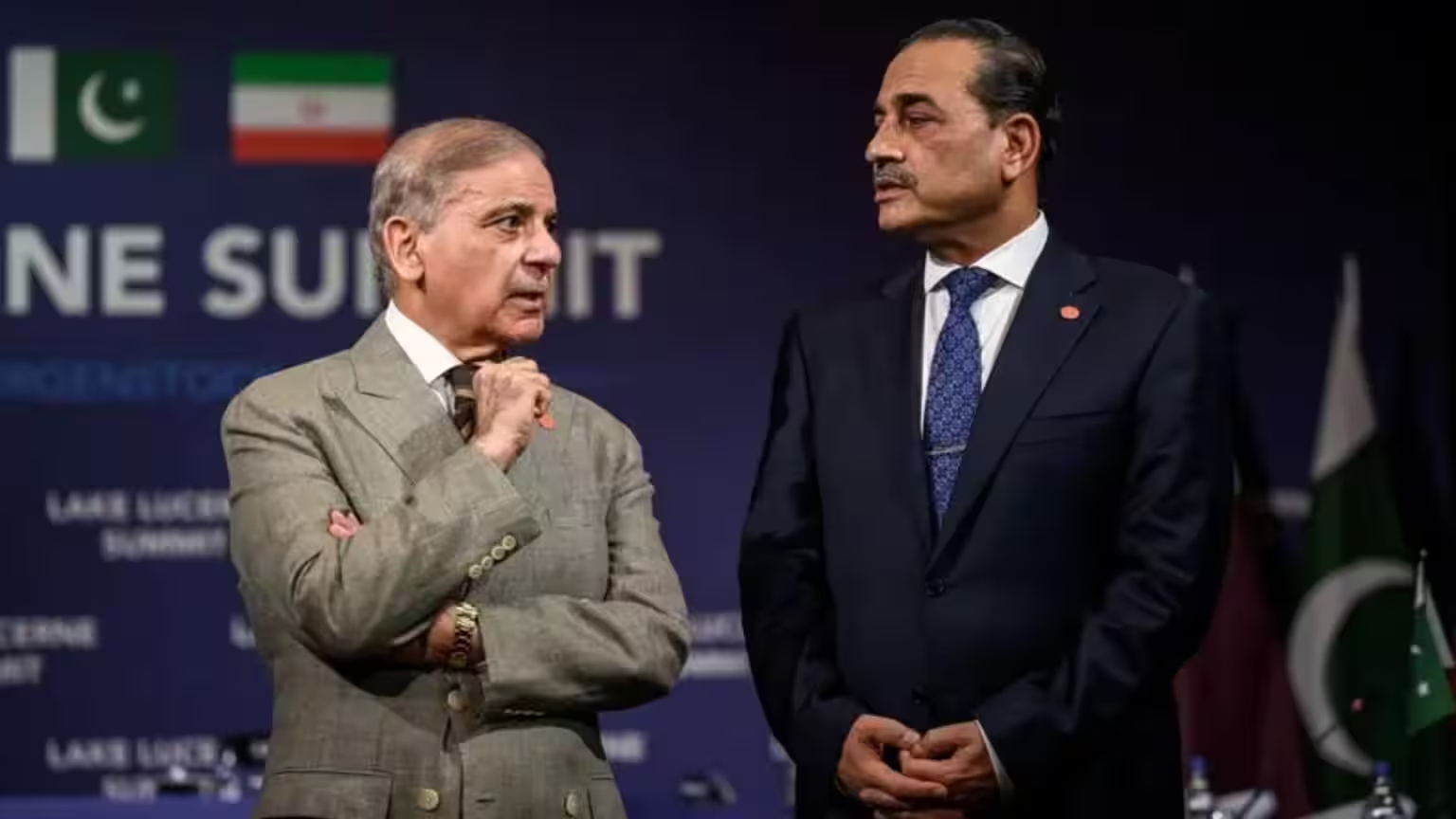
Prime Minister Shehbaz Sharif began a three-day visit to Saudi Arabia this week, taking the country’s top military officer with him at a moment when the Gulf region remains on edge over the prolonged confrontation between the United States and Iran. Pairing civilian and military leadership on the same itinerary signals how closely Islamabad is tracking developments around the Strait of Hormuz, and how much weight it places on its relationship with Riyadh.
What Happened
Sharif landed in Jeddah on August 6, according to Arab News Pakistan, at the start of a visit scheduled to run through August 8. He was received by Deputy Governor of the Makkah Region Prince Saud bin Mishaal bin Abdulaziz, the Prime Minister’s Office said in a statement. The delegation traveling with Sharif includes Chief of Defence Forces and Chief of Army Staff Field Marshal Syed Asim Munir, Deputy Prime Minister and Foreign Minister Ishaq Dar, and other cabinet ministers, Foreign Office spokesperson Tahir Andrabi told reporters at a weekly briefing. Andrabi said Sharif is expected to meet Saudi Crown Prince Mohammed bin Salman before the visit concludes.
Key Details
The Prime Minister’s Office described the trip as a chance to strengthen the longstanding partnership between the two countries and to exchange views on the regional situation, according to Arab News Pakistan. Andrabi said the visit carries significance beyond the immediate Gulf crisis and would help deepen strategic cooperation and coordination on regional and international matters.
Andrabi also said Pakistan continues working with regional allies to help resolve the standoff around the Strait of Hormuz, and credited Oman with playing a constructive role in encouraging de-escalation between Washington and Tehran. His remarks came a day after Iran’s foreign ministry said Tehran and Muscat had agreed on a route for ships transiting the strait and were finalising arrangements to jointly manage the waterway, Arab News Pakistan reported.
Why It Matters
Pakistan has positioned itself as an intermediary between Washington and Tehran since fighting between the two escalated earlier this year, and it helped broker an interim arrangement known as the Islamabad Memorandum of Understanding in June, according to Arab News Pakistan. Sending both the Prime Minister and the armed forces’ top officer to Jeddah in the same week suggests Islamabad wants to keep Saudi Arabia closely aligned with, and supportive of, that mediation effort.
The visit also matters because Pakistan and Saudi Arabia maintain one of the region’s longest-running defence relationships, built on decades of training exchanges, financial support and shared strategic interests in the Gulf’s stability.
Technical Background
The Strait of Hormuz is a narrow chokepoint between Iran and Oman through which a large share of the world’s seaborne oil and gas exports pass. Since the war between the United States, Israel and Iran began, Iran has held de facto control over shipping through the strait, according to Arab News Pakistan, making it one of the central points of friction between Tehran and Washington.
According to the report, US President Donald Trump cancelled planned strikes against Iran days before Sharif’s visit, saying regional countries had reached the outline of a deal to end the conflict. Pakistan, which shares close ties with both Gulf Arab states and, historically, with Iran, has cast itself as a bridge between the parties, though the durability of any ceasefire arrangement remains unconfirmed.
Strategic Analysis
For Islamabad, the timing of this visit is not incidental. Pakistan relies on Saudi Arabia for financial support, oil facilities and diaspora remittances from the large Pakistani community working in the Kingdom, and it depends on continued Gulf goodwill as it manages a fragile economy. Demonstrating a unified civil-military front in Jeddah reinforces the message that Pakistan speaks with one voice on regional security matters, a point Gulf capitals watch closely given past tensions between Pakistan’s civilian and military institutions.
At the same time, Pakistan’s continued role as a go-between in the US-Iran standoff carries risk. Any perception of taking sides could complicate relations with either Washington or Tehran, both of which matter to Islamabad for different strategic reasons.
Regional or Global Impact
A durable de-escalation around the Strait of Hormuz would ease pressure on global energy markets, which have remained volatile since the US-Iran war began. The reported Iran-Oman arrangement for managing shipping through the strait, if implemented, could reduce the risk of a wider disruption to oil and gas supplies that Gulf-dependent economies, including Pakistan’s, would otherwise feel through higher import costs.
For Saudi Arabia, hosting Pakistan’s Prime Minister and military chief at this juncture allows Riyadh to reinforce its own role as a regional stabilising force while keeping a close and long-standing security partner engaged.
Official Statements
The Prime Minister’s Office said the visit would help strengthen bilateral relations and reinforce multilateral cooperation between Pakistan and Saudi Arabia. Foreign Office spokesperson Tahir Andrabi said Pakistan deeply appreciates Oman’s contribution to fostering de-escalation and peaceful coexistence in the region, according to Arab News Pakistan.
What Comes Next
Sharif is expected to meet Crown Prince Mohammed bin Salman before concluding his visit on August 8. The outcome of that meeting, along with any further movement on the Iran-Oman shipping arrangement for the Strait of Hormuz, will offer the clearest signal of whether the current de-escalation holds. No additional details on specific agreements expected from the Jeddah talks have been released.
Conclusion
By sending its Prime Minister and top military officer to Saudi Arabia together, Pakistan is signalling both loyalty to a key strategic partner and continued ambition to help manage one of the Gulf’s most dangerous standoffs. Whether that diplomatic investment pays off will depend largely on decisions made in Washington and Tehran, over which Islamabad has only limited influence.