
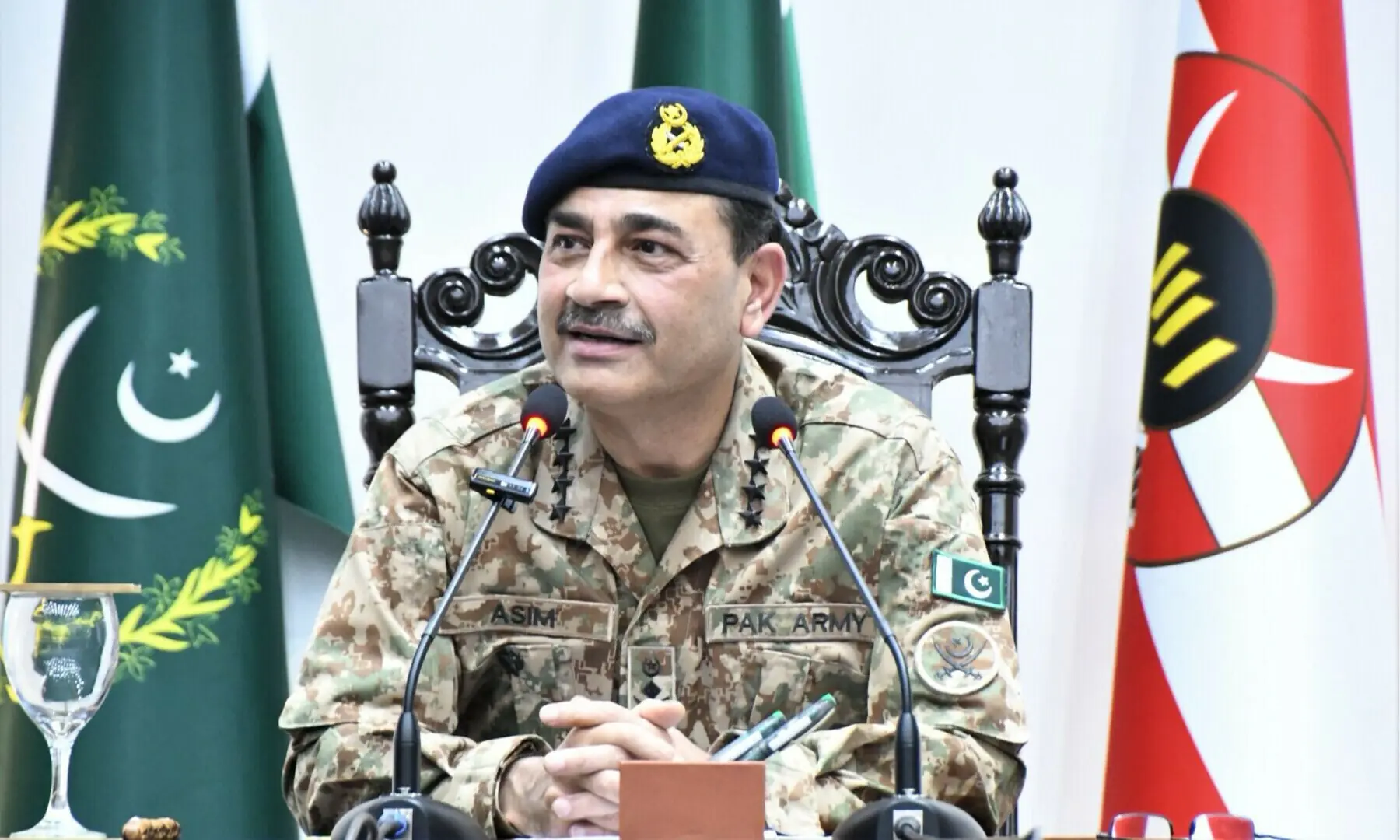
As the United States gradually retreats from its traditional role as the central arbiter of global strategy, the international system is undergoing a rapid realignment, creating opportunities for influential mid-sized states to redefine their roles. According to an analysis published by the Financial Times, Pakistan’s military leadership—under Chief of Defence Forces and Chief of Army Staff Field Marshal Asim Munir—has demonstrated exceptional adaptability during this transition.
The commentary examines the erosion of American global influence, particularly under President Donald Trump, noting that Washington’s reduced engagement has unsettled many allies and partners. However, it argues that Pakistan has responded more effectively than most by recalibrating its strategic posture with speed and flexibility.
The Financial Times identifies Field Marshal Asim Munir as a standout figure among leaders of middle powers navigating this changing landscape, describing him as the most successful in adjusting national strategy to what the paper characterises as Trump’s less structured approach to international affairs.
Placing this shift in historical context, the analysis compares the current moment to earlier periods when dominant powers struggled to manage decline following attempted reforms. It notes that although China has not aggressively moved to replace the United States as the primary global leader, this hesitation has created room for assertive and pragmatic middle powers to expand their influence.
Within this space, Pakistan is highlighted as a leading example. The paper portrays Field Marshal Asim Munir as a skilled multi-alignment strategist, capable of maintaining productive relations with major capitals including Washington, Beijing, Riyadh, and Tehran.
The analysis further observes that this strategic recalibration has enabled Islamabad to preserve engagement with the United States while avoiding the governance and democracy-centric pressures that previously defined American diplomatic interactions.
In contrast, the Financial Times notes that rivals such as India have struggled to adjust to the same degree, citing New Delhi’s relative discomfort with Trump-era diplomacy and its challenges in executing a similar balancing strategy.