
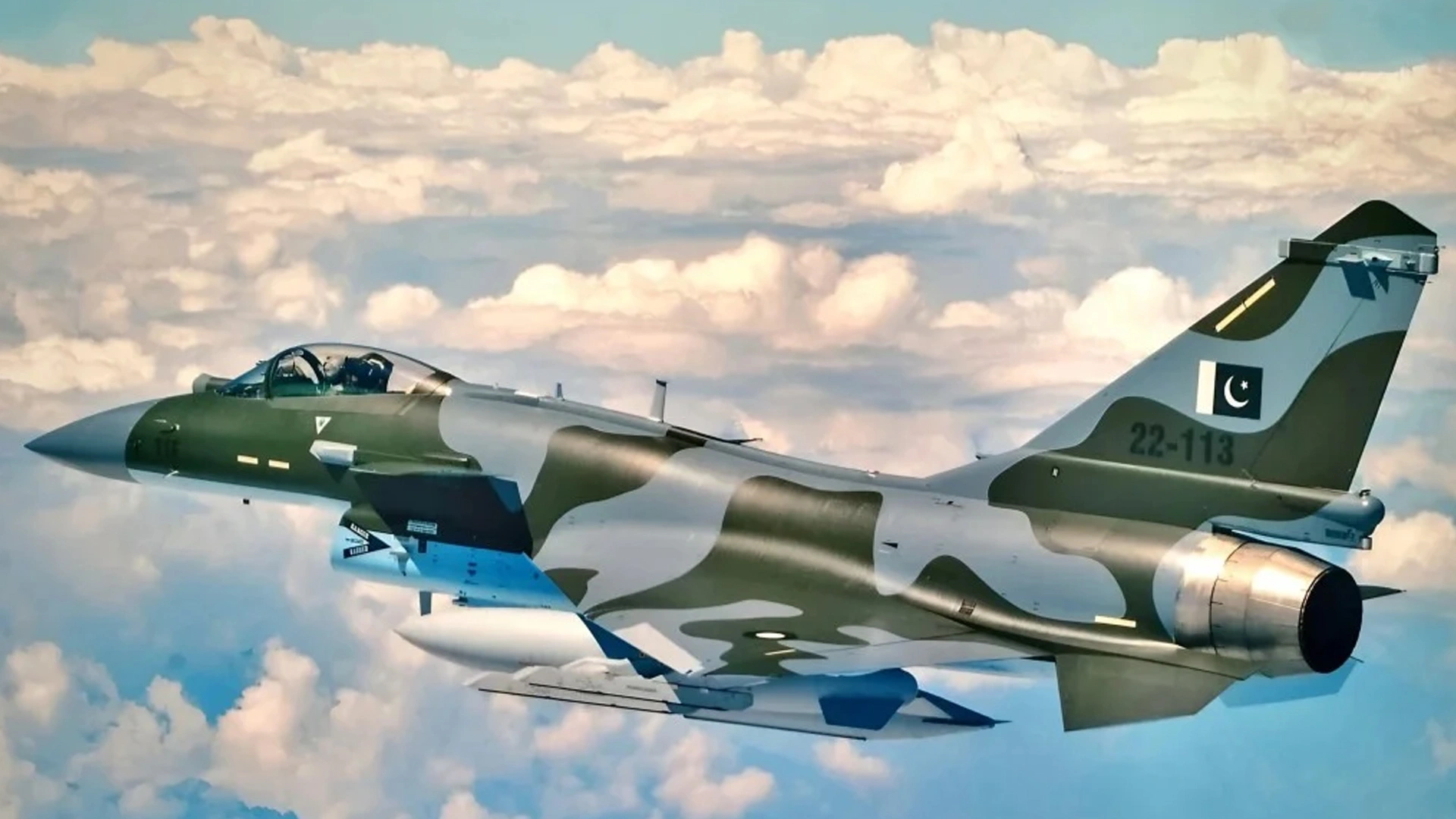
The Pakistan Air Force has successfully completed its large-scale “Golden Eagle” military exercise, which emphasized artificial intelligence–powered and network-centric combat operations, according to the Inter-Services Public Relations (ISPR).
Held within the Southern Air Command’s operational domain, Exercise Golden Eagle was designed to assess the force’s combat readiness and agility through the coordinated use of its full combat capabilities, ISPR stated.
The drill followed a two-force structure and concentrated on AI-enabled, net-centric operations while incorporating advanced indigenous technologies—ranging from disruptive systems to smart warfare tools—to address evolving regional security demands.
Operating under an Integrated Air Defense System, the exercise merged kinetic operations with activities across cyber, space, and electromagnetic domains.
During the kinetic phase, swing-role fighter aircraft executed first-shoot, first-kill missions, employing long-range beyond-visual-range (BVR) air-to-air missiles, extended-range standoff weaponry, and precision-strike systems. These platforms were complemented by airborne early warning and control (AEW&C) aircraft as well as air-to-air refueling assets.
The exercise also showcased manned-unmanned teaming, featuring deep-strike drones and loitering munitions operating effectively in a “contested, congested, and degraded” battlespace.
According to ISPR, the Golden Eagle exercise demonstrates the Pakistan Air Force’s steadfast commitment to sustaining high operational preparedness, advancing indigenous innovation, and confronting both emerging and future security challenges.