
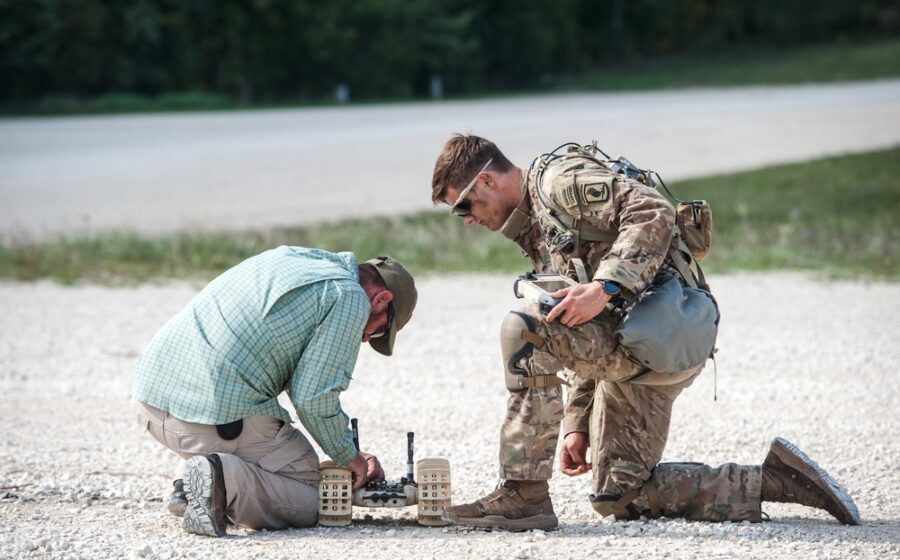
Artificial intelligence and autonomous systems are rapidly reshaping military affairs, promising faster decision-making, reduced risk to personnel and the ability to process overwhelming volumes of sensor data that would otherwise exceed human analytical capacity. Yet this same technology raises profound questions about accountability, escalation risk and the ethics of machine-assisted lethal decision-making.
Where AI Is Already Transforming Defence
Artificial intelligence has already found extensive application in intelligence, surveillance and reconnaissance, where machine learning algorithms sift through vast quantities of satellite imagery, drone footage and signals intercepts far faster than human analysts could manage alone. AI-assisted decision support systems also increasingly help commanders manage complex air defence engagements, prioritizing multiple simultaneous threats and recommending optimal interceptor allocation within seconds, a task that would overwhelm manual processing during a saturation attack.
Autonomous Systems on the Battlefield
Beyond decision support, growing numbers of autonomous and semi-autonomous systems, from loitering munitions capable of identifying and striking targets with limited human intervention to autonomous underwater vehicles used for mine detection and anti-submarine warfare, are entering operational service across multiple militaries. These systems promise to reduce risk to human operators while extending persistence in dangerous or denied environments where sustained human presence would be costly or hazardous.
The Global AI Military Competition
Major powers including the United States and China have identified artificial intelligence as a critical area of military-technological competition, investing heavily in research spanning autonomous vehicles, predictive maintenance, cyber defence and battlefield decision support. This competition has spurred a broader global race, with regional powers increasingly recognizing that falling behind in AI adoption could translate into a meaningful capability gap relative to more technologically advanced rivals.
Pakistan’s Emerging Interest in Military AI
Pakistan’s defence establishment has shown growing interest in artificial intelligence applications, particularly in areas such as drone autonomy, cyber defence and intelligence analysis, recognizing that AI adoption offers a relatively cost-effective way to enhance capability without the enormous expense of matching larger rivals platform-for-platform. Continued collaboration with technology partners, alongside efforts to build domestic AI research capacity, is likely to shape how quickly Pakistan can integrate these capabilities into its broader force structure.
Ethical and Strategic Risks
The introduction of autonomy into lethal decision-making raises serious ethical and legal questions about accountability when autonomous systems make mistakes, alongside strategic concerns that faster, machine-assisted decision cycles could compress crisis response times in ways that increase the risk of unintended escalation between rival states. These concerns have prompted ongoing international discussions, though consensus on binding rules governing military AI remains elusive.
Conclusion
Artificial intelligence and autonomous systems are set to reshape military capability as fundamentally as any technology in recent decades, offering significant advantages while introducing new risks around accountability and escalation control. For Pakistan and other regional militaries, thoughtfully integrating these technologies while engaging in international dialogue on responsible use will be essential to capturing their benefits without compounding regional instability.