
Defence policy is the framework through which a nation translates its security concerns into concrete decisions about force structure, procurement, alliances and budget allocation. Far from being purely a military matter, effective defence policy requires balancing threat perception, economic constraints, diplomatic considerations and domestic political realities into a coherent long-term strategy.
The Building Blocks of Defence Policy
At its core, defence policy begins with a threat assessment that identifies the most likely and most dangerous challenges a country may face, ranging from conventional interstate conflict to internal insurgency and non-traditional security threats such as climate-driven resource scarcity. From this assessment flows decisions about force structure, whether to emphasize a large standing army, advanced air power, naval reach, or nuclear deterrence, and how to allocate limited budgets across competing priorities such as personnel costs, equipment modernization and research and development.
Pakistan’s Security Policy Framework
Pakistan formalized a more holistic approach to security through its National Security Policy, which explicitly broadened the traditional military-centric definition of security to include economic security, human security and public welfare alongside conventional defence concerns. This reflects a growing recognition among Pakistani policymakers that durable national security cannot rest on military capability alone but must also address economic stability, internal cohesion and citizen wellbeing as foundations of national resilience.
Civil-Military Coordination
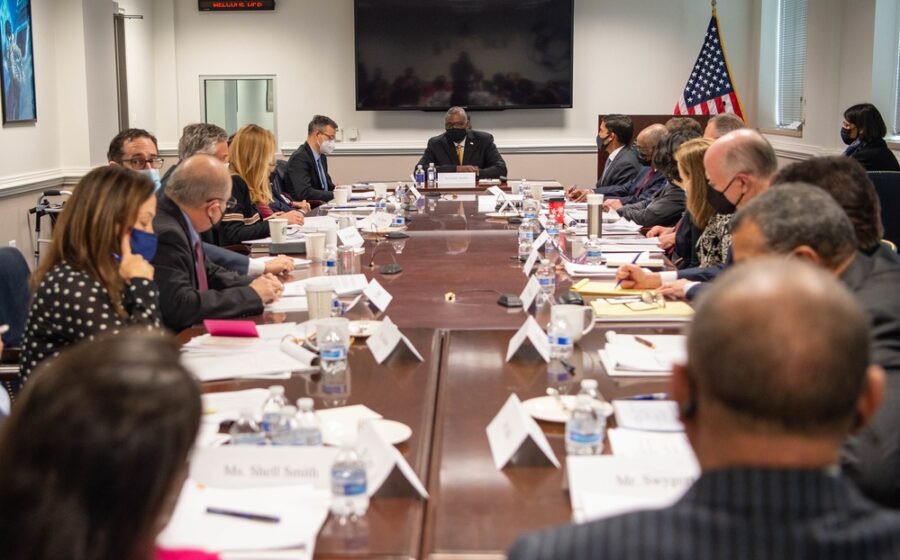
Effective defence policy requires close coordination between civilian government institutions and military leadership, ensuring that strategic objectives set by elected governments are translated into achievable military plans, while military assessments of capability and risk properly inform civilian decision-making. Institutions such as Pakistan’s National Security Committee and National Security Division play a role in structuring this dialogue, though the balance of civil-military influence in policy formulation remains a subject of ongoing academic and political discussion.
Budgetary Trade-offs
Every defence policy decision ultimately confronts the reality of finite resources. Nations must continuously weigh investment in expensive, high-end platforms such as fighter aircraft and submarines against broader force readiness, personnel welfare and equipment sustainment. For a developing economy like Pakistan, these trade-offs are especially acute, requiring careful prioritization to maintain credible deterrence against regional threats without compromising economic development goals.
Learning From International Approaches
Comparing defence policy approaches across countries reveals useful lessons. Smaller nations facing larger neighbours, such as Israel or Singapore, have historically compensated through technological edge, rapid mobilization capability and close international partnerships rather than sheer numerical mass. These models offer instructive parallels for Pakistan as it seeks to maintain deterrence against a numerically larger neighbour through qualitative improvements, indigenous defence production and diversified international partnerships.
Conclusion
Defence policy sits at the intersection of strategy, economics and politics, requiring constant recalibration as threats, technology and national priorities evolve. For Pakistan, an effective, well-resourced and coherently coordinated defence policy remains fundamental to navigating a challenging regional security environment while supporting broader national development objectives.