
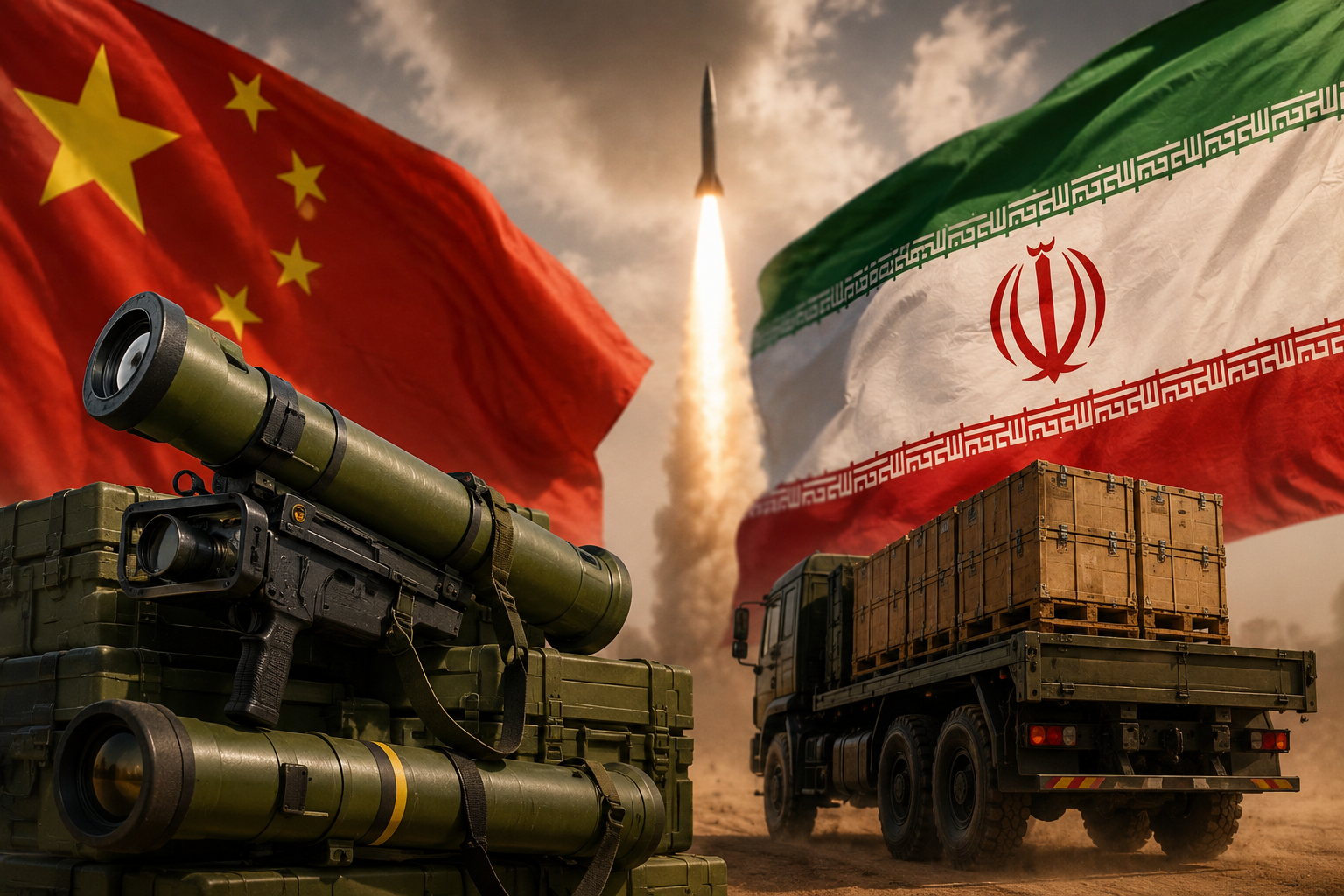
Iran is expected to receive hundreds of Chinese-made man-portable air defence systems within weeks, potentially strengthening Tehran’s ability to counter low-flying aircraft and other aerial threats as it rebuilds its air-defence network.
Iran is preparing to take delivery of an initial batch from an order of as many as 400 Chinese shoulder-fired air-defence missile systems, according to three sources familiar with the arrangement cited by Reuters.
The reported acquisition comes as Tehran works to reinforce its short-range air defences following months of conflict involving the United States and Israel, during which Iranian military and infrastructure sites have faced extensive attacks.
The deal is reportedly valued at around $60 million to $70 million and covers between 300 and 400 QW-12 and FN-16 man-portable air defence systems (MANPADS).
China-Iran Defence Cooperation in Focus
The reported purchase would represent a significant development in defence ties between Tehran and Beijing.
China was an important supplier of military equipment to Iran during the 1980s, but major weapons transfers declined considerably by the late 1990s. More recently, attention has focused on Chinese companies accused by Washington of supplying missile-related components and materials to Iran.
Earlier this year, Reuters reported that Tehran was discussing a broader range of Chinese weapons, including MANPADS, anti-ballistic systems and anti-satellite capabilities.
The latest reported deal suggests Iran is prioritizing the restoration and expansion of its air-defence capabilities.
QW-12 and FN-16 Could Strengthen Short-Range Defences
Unlike large surface-to-air missile batteries, MANPADS are compact weapons designed to be operated by personnel on the ground.
Their mobility allows air-defence teams to disperse across different locations and provide point defence against suitable low-altitude aerial threats.
For Iran, adding several hundred portable launchers could complement larger air-defence systems by increasing the number of locations from which short-range threats can potentially be engaged.
However, the battlefield impact of any delivery would depend on several factors, including the number of operational missiles supplied, personnel training, deployment patterns and integration with Iran’s wider air-defence structure.
Delivery Could Begin Within Weeks
According to Reuters’ sources, the first shipment is expected to reach Iran within weeks.
The transaction was reportedly arranged through Zhongqing Baoshang International Investment, a Hong Kong-based company. Possible air and land routes for moving the systems have been considered, according to the report.
The reported logistics have also attracted regional attention. Reuters said Beijing denied involvement, while Pakistan rejected speculation concerning assistance with transit arrangements.
Those denials are important because details surrounding the reported transfer come largely from unnamed sources and have not all been publicly confirmed by the governments involved.
Why the Reported Deal Matters
The potential acquisition highlights how Iran may be adapting its air-defence strategy after recent combat exposed vulnerabilities in its ability to protect military installations and critical infrastructure.
Long- and medium-range air-defence systems remain essential for defending large areas, but portable systems provide a different capability. Their small footprint and mobility make them easier to disperse and potentially harder to locate than conventional fixed or vehicle-based batteries.
A large MANPADS inventory could therefore add another layer to Iran’s air-defence network, particularly around sensitive facilities and military units.
The reported deal could also signal a broader shift in Iran-China military cooperation if it leads to additional purchases of complete Chinese weapon systems.
For now, the scale, delivery schedule and operational deployment of the reported QW-12 and FN-16 acquisition will be important indicators of how quickly Tehran can strengthen its short-range air defences.