
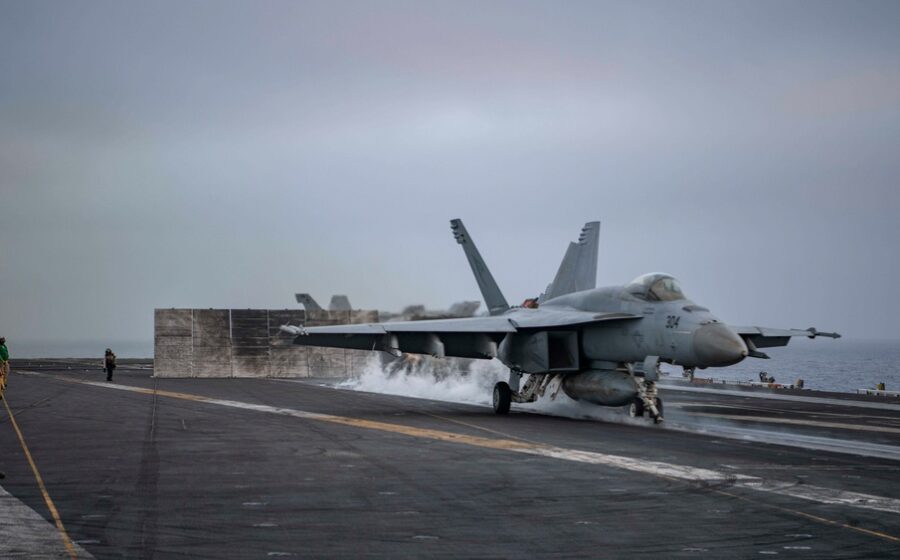
Naval aviation extends a navy’s reach and awareness far beyond what surface ships and submarines alone can achieve, providing long-range surveillance, anti-submarine warfare and airborne strike capability across vast maritime expanses. For a navy operating along a coastline as strategically important as Pakistan’s, effective naval aviation is central to protecting sea lanes and detecting threats long before they approach the coast.
Maritime Patrol Aircraft: The Long-Range Eyes at Sea
Maritime patrol aircraft, exemplified globally by platforms such as the P-3 Orion and the newer P-8 Poseidon, combine long endurance with sophisticated radar, sonobuoys and magnetic anomaly detectors to hunt submarines and monitor surface shipping across enormous ocean areas. The Pakistan Navy has operated P-3C Orion aircraft to extend its maritime surveillance reach across the Arabian Sea, providing early warning of surface and subsurface threats approaching Pakistani waters and critical infrastructure such as the Gwadar and Karachi ports.
Anti-Submarine Warfare From the Air
Airborne anti-submarine warfare remains one of the most challenging and specialized naval aviation missions, requiring aircrew to detect and track quiet, submerged submarines using a combination of sonobuoys, magnetic anomaly detection and, increasingly, data shared from surface ships and satellites. Given the expanding submarine fleets of regional navies, maintaining a credible airborne anti-submarine capability has become an increasing priority for the Pakistan Navy’s aviation arm.
Naval Helicopters and Shipborne Aviation
Helicopters embarked aboard frigates and destroyers extend a warship’s sensor range and strike capability considerably, allowing for over-the-horizon targeting, search and rescue, and anti-submarine prosecution using dipping sonar and lightweight torpedoes. The Pakistan Navy operates helicopters aboard its frigate fleet to support exactly these missions, providing a crucial extension of shipboard sensors and weapons across a wider operating area than the ship’s own systems could cover alone.
Carrier Aviation: A Capability Few Navies Possess
Aircraft carrier aviation, involving fixed-wing fighters and airborne early warning aircraft operating from a ship’s deck, remains an extremely expensive and technically demanding capability possessed by only a handful of major naval powers such as the United States, China and India, whose carrier-based aviation programme continues to expand. For most regional navies, land-based maritime patrol aircraft and embarked helicopters offer a more cost-effective way to achieve comparable maritime domain awareness without the enormous expense of carrier aviation infrastructure.
Future Directions in Naval Aviation
Naval aviation worldwide is increasingly incorporating unmanned systems, including ship-launched surveillance drones and unmanned underwater vehicles that extend anti-submarine detection capability without risking aircrew. As navies across the Indian Ocean region continue modernizing, unmanned maritime aviation is likely to play a growing role in extending persistent surveillance across contested waters at a fraction of the cost of traditional manned patrol aircraft.
Conclusion
Naval aviation transforms a navy’s awareness and reach, providing the long-range surveillance and anti-submarine capability essential to protecting sea lanes and coastal waters. For the Pakistan Navy, sustained investment in maritime patrol aircraft, embarked helicopters and emerging unmanned systems will remain vital to securing the country’s maritime approaches.