
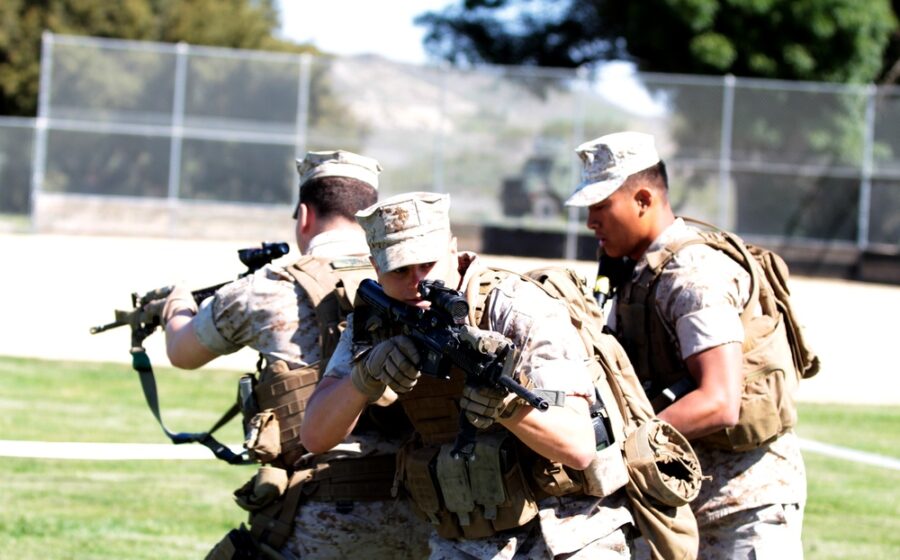
Contemporary armed conflict rarely resembles the conventional, front-line battles of the twentieth century. Today’s conflicts blend conventional manoeuvre warfare, insurgency, proxy sponsorship, cyber operations and information warfare into what analysts often term hybrid warfare. Examining recent conflicts offers valuable lessons for any military establishment, including Pakistan’s, seeking to prepare for the security challenges of the coming decade.
The Changing Character of War
While the fundamental nature of war, as a contest of wills backed by organized violence, remains constant, its character continues to evolve. The war in Ukraine has demonstrated that mass, industrial-scale artillery attrition can coexist with cutting-edge drone warfare and satellite-enabled targeting. Conflicts in the Middle East have shown how non-state actors, backed by state sponsors, can employ precision-guided rockets, drones and anti-ship missiles once considered the exclusive domain of national militaries, blurring the line between conventional and irregular warfare.
Interstate Rivalry and Proxy Dynamics
South Asia’s security environment continues to be shaped by long-standing interstate rivalry, most notably between Pakistan and India, punctuated periodically by border skirmishes, artillery exchanges along the Line of Control, and diplomatic crises. Beyond direct rivalry, proxy dynamics, where external actors support militant or insurgent groups to pursue strategic objectives without direct confrontation, remain a persistent feature of the regional security landscape, complicating attribution and response.
Insurgency and Counterinsurgency Lessons
Pakistan’s own extensive counter-insurgency experience, particularly through operations such as Zarb-e-Azb and Radd-ul-Fasaad against militant networks in the former FATA region, offers hard-earned lessons on combining conventional military force with intelligence-led operations, population-centric stabilization efforts and border management. These campaigns underscored that durable security gains require more than kinetic operations alone, extending to governance, reconstruction and sustained vigilance against resurgent networks.
Information and Cyber Dimensions of Modern Conflict
Modern conflicts increasingly play out across information and cyber domains as much as physical battlefields. State and non-state actors use social media disinformation, cyber intrusions and psychological operations to shape narratives, undermine adversary morale and influence international opinion, often well before or entirely without kinetic engagement. This dimension has become inseparable from traditional military planning, requiring dedicated capabilities to both conduct and defend against such operations.
Implications for Regional Security Planning
For Pakistan, these evolving patterns of conflict argue for continued investment in a balanced force structure that retains credible conventional deterrence while building specialized capabilities in counter-insurgency, cyber defence, drone warfare and information operations. Given the country’s position at the intersection of South Asian, Middle Eastern and Central Asian security dynamics, an ability to respond flexibly across the full conflict spectrum, from border skirmishes to hybrid and irregular threats, remains essential to national security.
Conclusion
Modern conflict rewards militaries that can operate seamlessly across conventional, irregular, cyber and information domains simultaneously. Studying recent conflicts around the world, while adapting lessons to Pakistan’s unique geographic and strategic circumstances, will remain a critical task for defence planners navigating an increasingly complex and interconnected threat environment.